
SMART SOURCE OF FUNDS SOFTWARE

Secure & verified statements in seconds

With our Open Banking powered reports, there’s no more need to search through pages and pages of bank statements. Instead, you’ll get verified financial insights in just a few clicks. The source of funds check process involves verifying the client’s bank account, ensuring not only that the funds are present, but also confirming their origin and legitimacy.


Try it for yourself

Our Source of Funds solutions uses cutting edge technology to reduce the burden of gathering and verifying your customer’s financial evidence.

Gathering Source of Funds using traditional methods can be a frustrating experience for both the customer and company. Bank statements are commonly required to trace the source of funds in a transaction, and there is often a lot of back and forth, as customers send through paper documents which, when reviewed; don’t provide enough sufficient evidence, requiring additional requests and documents.

Financial institutions and regulated firms use our software for conducting Source of Funds (SOF) checks as part of their diligence process to comply with regulatory requirements.

Get verified and analysed statements, instantly, with our Open Banking-powered Source of Funds software.

Our digital solution means you can stop chasing clients for bank statements and gather verified evidence instead. Our Open Banking solution connects with 95% of UK banks, allowing your customers to easily submit their financial statements linked in their bank account, which then are instantly analysed for you. The platform helps meet funds obligations and streamlines such checks for compliance.

The software supports the entire SOF checks process, making it easier for institutions to fulfil their legal and regulatory obligations to avoid financial crime.

Our solution supports a risk based approach to compliance, providing the documentation required by mortgage lenders, assisting in evidencing the legal transfer of property, and helping to prevent criminal activity. This ensures that no person commits an offence under anti-money laundering laws by verifying the source of funds and maintaining compliance throughout the transaction process.
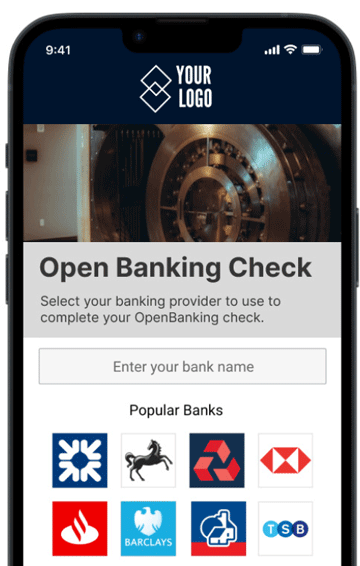
Open banking powered source of funds

Key Features of our source of funds app that result in Faster Financial Due Diligence
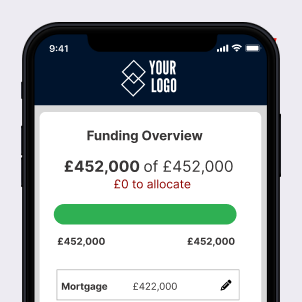
Funding Overview - £452,000 of 452,000.

Dynamic funds totalizer

Often, the simplest solutions are the best and that’s certainly the case with our funds totalizer. This simple visual aid helps ensure your customer submits sources that total the value of the transaction, including tracking all purchase money through formal channels.
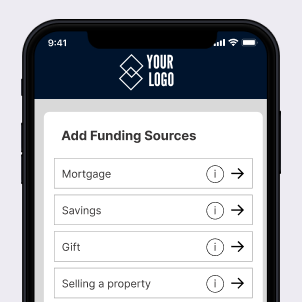
Add Funding Sources - Mortgage, Savings, Gift, Selling a Property.

Smart Financial Fact-Finds

Instead of long, tedious questionnaires, your customer only needs to select the sources relevant to them and answer simple, relevant questions alongside providing an appropriate form of evidence. This includes gifted deposits, other assets, and sources related to the specific transaction being undertaken.
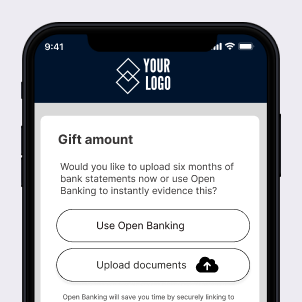
Source of Funds evidence capture options.

Uploads or Open Banking

Not everyone has online banking, so we give your customers the flexibility to choose between Open Banking or document upload when submitting their financial evidence, reducing the need to request additional documents. This includes uploading documents such as a completion statement from a conveyancer, a letter confirming the source of funds, or evidence of a house sale.

WHY CHOOSE CREDAS’ SOURCE OF FUNDS SOLUTION

Get statements swiftly & securely via our Open Banking partner
Instant analysis and automatic categorisation of inbound and outbound transactions
Affordability analysis and missed payments profiling
Smart financial fact-find that takes the burden off of your customer
Simple, seamless integration into your existing onboarding processes
Easily exportable as a one single PDF with all evidence and notes

ACTIONABLE EVIDENCE IN A CLICK

Ditch the highlighter pens and calculator. Make faster decisions with automatic data analysis and categorisation.

Property and Legal professionals in particular face significant hurdles in conducting source of funds checks due to increasing regulatory demands. Our Open Banking powered solution uses state-of-the-art self-learning models to enhance and analyse transactions, enabling you to easily understand your customers financial history.

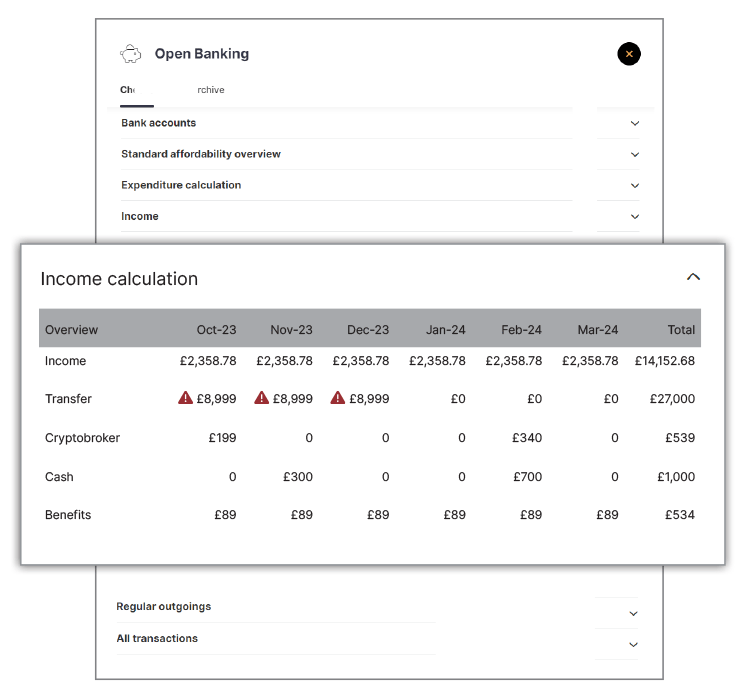
Our detailed reports include an affordability overview; analysing total income vs total expenditure over the past six months;  analysis of all inbound transactions and income over the past six months; a summary of regular direct debits/standing orders as well as a full six-month breakdown.

Automatic transaction data categorisation

Our Source of Funds feature automatically analyses and sorts incoming transactions into 27 different categories, ranging from cash payments, salary, cryptocurrency and international payments. Outbound transactions are analysed and sorted into 74 different categories, ranging from gambling sites to peer-to-peer transfers and inter account transfers.

Credas Source of Funds Report

Frequently Asked Questions

What is a Source of Funds check?
“Source of Funds” refers to the origin or provenance of money or assets used in a particular financial transaction or investment. All anti-money laundering regulated entities, including Estate Agents and conveyancers, are required to determine the Source of Funds as part of Customer Due Diligence (CDD). The regulations require regulated entities to assess whether the Source of Funds are consistent with their knowledge of the customer, the customer’s business and their risk profile.

You may also have heard of Source of Wealth. Source of Wealth differs from Source of Funds by taking into consideration the wider financial context of the customer not just the funds behind used for the transaction. Regulations 33 & 35 require Source of Wealth to be established when enhanced due diligence is necessary, such as when the customer is a Politically Exposed Person (PEP) or established in a high-risk territory.

Which banks can your Source of Funds app connect with?
Our Source of Funds solution can connecting with over 90 account providers including the big 5 – Lloyds, HSBC, Barclays, NatWest and Santander, as well as challenger banks like Starling, Revolut and Metro. For a full list of all accounts please get in touch.

Can you connect to multiple accounts?
Yes, your customer can easily connect to multiple accounts in one go with all reports saved against your customer’s file. For each account provider, they will need to provide permission and account authentication.

How secure is Open Banking?
Open Banking uses rigorously tested software and security systems. Your customer will never be asked to give access to their login details, PINs or passwords. In addition, only apps and websites regulated by the FCA can access the Open Banking infrastructure and your customer chooses when, with whom, and how long third parties get access to their data.

What are the benefits of using Open Banking for Source of Funds?
In 2024, falsifying or editing documents is a fairly trivial task that most people can achieve without specialist knowledge or software. According to CIFAS, in 2023, falsified bank statements accounted for 31% of all reported false applications*. Open Banking allows for swift and automated verification of a customer’s financial statements and removes lengthy waiting periods and unnecessary paperwork. For your customer, they no longer have to download documents, sift through drawers looking for paperwork or head into branch to get certified copies.

Why do cash payments poses significant money laundering risks?
Cash payments present a unique challenge when it comes to source of funds (SOF) and source of wealth (SOW) checks, as they are often exploited in money laundering and terrorist financing schemes. The National Crime Agency has identified cash transactions as a common method for criminals to transfer criminal property and introduce dirty money into the financial system. This is particularly relevant in the property market, where large cash payments can be used to disguise the origins of illicit funds.

Estate agents, solicitors, and other professionals involved in high-value transactions must be especially vigilant when dealing with cash payments. Under the Money Laundering Regulations, there is a legal requirement to conduct thorough customer due diligence and ongoing monitoring to prevent money laundering and ensure compliance with anti money laundering (AML) obligations. This includes scrutinising transactions undertaken in cash, understanding the customer’s business relationship, and identifying high risk scenarios—such as dealings with politically exposed persons or clients from a high risk third country.

To verify the legitimacy of cash payments, businesses must obtain robust supporting documents. This may include bank statements showing the accumulation of funds, pay slips to confirm employment income, completion statements for property sales, and letters confirming the source of funds. In some cases, more documentation may be required to provide proof that the funds have a legal purpose and are not linked to illegal activities. Enhanced due diligence is essential for high risk clients or unusual patterns of cash transactions, and may involve a deeper investigation into the customer’s risk profile and the apparent economic purpose of the transaction.

The Solicitors Regulation Authority (SRA) and other regulatory bodies stress the importance of conducting comprehensive SOF and SOW checks, especially when cash is involved. Businesses must ensure that they are able to conduct source of funds checks effectively, gather all necessary evidence, and maintain a clear audit trail to demonstrate compliance with regulatory requirements. This includes ongoing monitoring of the customer’s transactions and risk profile, as well as enhanced ongoing monitoring for high risk clients or those with complex business relationships.

If suspicious activity is detected—such as an unusual pattern of cash payments, the use of stolen identification documentation, or funds that cannot be traced to a legitimate source—businesses are obligated to report this to the relevant authorities, such as the National Crime Agency. Prompt reporting helps prevent the transfer of criminal property and supports the wider effort to remove criminal property from the financial system.

In summary, cash payments significantly increase the risk of financial crime, and it is essential for businesses to conduct thorough due diligence, including SOF and SOW checks, to prevent money laundering and terrorist financing. By obtaining the right supporting documents, scrutinising transactions, and maintaining ongoing monitoring, businesses can ensure compliance with AML regulations and help protect the integrity of the financial system.

For fast Source of Funds, get in touch.

Book a demo - Sector pages

Appears on sector pages

"*" indicates required fields

This field is for validation purposes and should be left unchanged.
Name*
Top