REAL-TIME AML CHECKS ONLINE

Easily Meet Your Anti-Money Laundering Obligations and complete Customer Due Diligence

Businesses across numerous sectors face compliance pressures from regulatory authorities, such as HMRC and the SRA to battle money-laundering in the UK. AML checks are required for financial institutions, estate agents, and legal professionals, highlighting the sectors impacted by AML regulations.

The importance of having robust AML checks in place has never been more critical. AML systems are essential tools that help these sectors detect and prevent criminal activity, supporting the fight against financial crime.

Customer due diligence is a key part of AML compliance, and customer due diligence measures must be applied when establishing a new business relationship.


Get Started! Book a demo of our AML software today.

MANAGE YOUR ANTI-MONEY LAUNDERING PROCESS WITH CREDAS’ AML CHECKING SERVICES

Failure to manage and demonstrate robust Anti-Money Laundering compliance could potentially result in severe penalties, including fines, reputational damage and even imprisonment for senior management, company executives or directors.

It is a legal requirement for businesses to submit a Suspicious Activity Report (SAR) to regulatory authorities when suspicious behaviour is confirmed.

Credas’ AML software enables your business to perform Anti-Money Laundering checks in real-time and confirms the ID document matches the individual. AML systems include client screening, transaction screening, and transaction monitoring to identify and mitigate risks. Advanced AML systems also help reduce false positives, improving efficiency and accuracy in detecting suspicious activities.

The Credas ID document and identity verification solution has been developed using next-generation facial recognition technology.

Credas also gives your business a clear audit trail and assurance that your confidential information is safe and secure. Keeping comprehensive records of AML compliance efforts is essential to protect your business during investigations.

Ongoing monitoring is especially important for existing customers to detect suspicious activity.
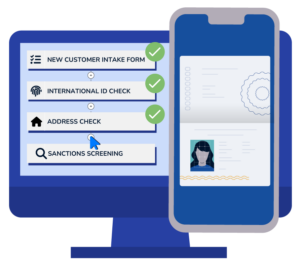
Credas also gives your business a clear audit trail and assurance that your confidential information is safe and secure.

Get Started

TRUSTED BY THESE COMPANIES

Key features of our AML checks

Trust Framework certified ID checks
Remote or in-person ID verification
International Document Verification
PEPs and Sanctions Screening
Adverse Media Screening
Proactive Ongoing Monitoring
Source of Funds / Wealth
Ultimate Beneficial Owners Checks
Know Your Business Checks

How Can Credas Help Your Anti-Money Laundering Efforts?

Credas helps clients perform AML checks in real-time using cutting-edge facial recognition – reducing complex, time-consuming, resource-intensive and often expensive processes.

AML consultancy services can assist businesses in understanding and implementing necessary compliance measures.

By working with a wide range of leading commercial data suppliers, Credas offers comprehensive checks on individuals and can verify against over 2,500 different types of identity documents from around the world.

Credas’ AML checking services enable firms to manage the complexity of onboarding and monitoring customers and employees while ensuring that our clients meet their compliance obligations. Transaction monitoring is essential for detecting suspicious activities and ensuring ongoing compliance.

By accessing multiple data sources Credas can offer industry leading accuracy and wide customer coverage for identity and AML checks.

Through our Open Banking powered financial checks we can help determine Source of Funds and Wealth. Ongoing monitoring of financial activities is necessary to detect suspicious patterns after customer onboarding. Our detailed, digital reports accurately analysis your customers financial history to help identity suspicious patterns.

We can also support your Enhanced Due Diligence measures with our adverse media screening, law enforcement checks and corporate screening.

Businesses must keep a record of all customer due diligence measures they carry out for at least five years. With our AML software we can help you securely keep their records while minimising the data management.

Know Your Business reports.

A simple, slick and smart AML platform that your customers and compliance manager will both love.

Book a demo

ANTI-MONEY LAUNDERING FAQ’S

Frequently asked questions, answered.

FAQ Icon WHAT IS ANTI-MONEY LAUNDERING IN SIMPLE TERMS?

In the most general sense, Anti-Money Laundering (AML) is the blanket term describing the collection of laws, processes, and regulations used to prevent illegally gained money from entering the financial system.

Financial institutions, such as banks and related entities, are legally required to implement AML checks to detect and prevent money laundering activities in compliance with global standards like FATF guidelines.

AML targets a wide range of activities, from corruption and tax evasion to manipulating the market and trading with illicit goods, and the efforts to conceal these activities as the original source of funds.

Since the majority of criminals and terrorists rely heavily on a cash flow of laundered money for their illegal activities, having the appropriate AML checks in place has broader crime-reducing implications.

Under Money Laundering Regulations many businesses are required to conduct thorough customer due diligence to help combat money laundering and economic crime. AML checks are essential part of customer due diligence which screening customers against PEPs and Sanctions lists and verifying their claimed identities. Transaction screening and ongoing transaction monitoring are crucial for identifying suspicious behaviour and mitigating money laundering risks. Failure to meet to AML obligations can lead to financial penalties and even disqualification as business/director.

Detecting suspicious activity is a key part of AML checks, and transaction monitoring is essential for detecting suspicious activities and ensuring compliance with AML regulations.

FAQ Icon What are AML checks?

AML checks refer to a range of procedures that help businesses identify and prevent potential money launderers and bad actors from using their services. These checks involve conducting due diligence on customers, which can include verifying their identity, screening them against watchlists, and performing financial due diligence.

While the Money Laundering Regulations do not provide a standard definition of what constitutes an AML check, industry best practices typically involve verifying a customer's ID, confirming their address, ensuring they are not impersonating a recently deceased person, and conducting PEPs and Sanctions checks. Once these steps are completed, a business can assess the customer's risk profile and determine if any additional due diligence is required.

FAQ Icon What businesses need to run AML checks?

Any business that falls under the 2017 Money Laundering Regulations is required to conduct customer due diligence and identify whether they are working with potentially high-risk customers, such as PEPs or their relatives and closely associated persons (RCAs). The industries covered under the Money Laundering Regulations include the financial sector, real estate and property, lettings, legal services, accountancy, gambling, high-value dealers (commonly art galleries and auctions but extending to any business that accepts a single or multiple cash payments totalling more than 10,000 euros), money transfer businesses (MABs) and banking.

A key component of effective due diligence is identifying the beneficial owner (UBO), which is the individual who ultimately owns or controls the customer, whether directly or indirectly. This step is vital to prevent money laundering and terrorist financing, as criminals often attempt to hide behind complex company structures or third parties.

In addition to Money Laundering Regulations, all business regardless of sector, are expected to the compile with the UK sanctions regime. Businesses that have been fined by the Office of Financial Sanctions Implementation for lack of compliance include a hospitality business, an energy firm and telecommunications company.

FAQ Icon Why are AML checks essential to protect against financial crime?

Since the majority of criminals and terrorists rely heavily on a cash flow of laundered money for their illegal activities, having the appropriate AML checks in place has broader crime-reducing implications.

Most countries have their own set of AML regulations guided by the FATF Recommendations. The UK is guided by the 2017 Money Laundering Regulations and subsequent amendments. Businesses regulated by money laundering laws must perform AML checks as part of customer due diligence. This step is crucial in identifying and mitigating the risk of money laundering.

Key tools in this process include:

  • Identity Verification: Confirming your customer is who they say they are
  • Customer Screening: Verifying your customer doesn't appear on global watchlists or is high-risk, such as a PEP (Politically Exposed Person).
  • Ultimate Beneficial Owners identification: Verifying all parties that are set to benefit from the transaction such other individuals listed on a title deed.
  • Financial due diligence: Confirming the source of funds are from legitimate and explainable sources
  • Risk assessments: Determining the level of risk the customer and what measures to take to mitigate the risk of money laundering

Establishing robust internal controls and monitoring systems is essential for guiding and informing the nature of AML checks. Moreover, businesses should document their AML procedures in a policy statement and maintain meticulous records for at least five years to demonstrate their compliance.

AML checks don't just apply to individuals though, they also apply to business relationships. When working with new business partners it is essential that you establish any Ultimate Beneficial Owners (UBOs) and screen them for appropriate risks.

Top